

Skip to content
+966 55 744 0813 WhatsApp
Instrumentation · TT-415

Stable, accurate temperature, loop after loop.

Pt100 RTDs, thermocouples, heavy-duty assemblies and smart transmitters that turn a sensor signal into a measurement your control system can rely on for years.

Overview

Temperature governs reaction rates, product quality, energy use and equipment life. A drifting sensor rarely fails loudly; it simply makes the process a little worse every day.

We supply complete measuring points: sensor element, thermowell, connection head and transmitter, specified together so the response time, immersion depth and accuracy are right for the duty.

Typical applications

Where it is used

  • Reactor & vessel temperature control
  • Boilers & steam systems
  • Pasteurisation temperature logging
  • Chilled water & HVAC
  • Furnaces & kilns
  • Bearing & motor protection
  • Storage tank monitoring
  • Cleanroom & environmental logging
Technologies

Temperature instruments we supply

6 options. We recommend the one that suits your application, not the one that happens to be in stock.

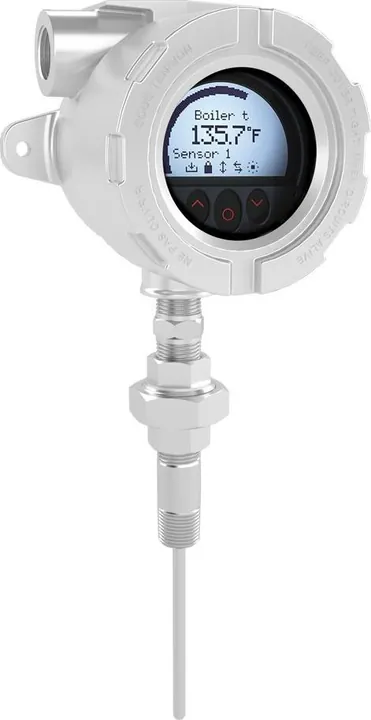
RTD Sensors (Pt100 / Pt1000)
01 Sensor

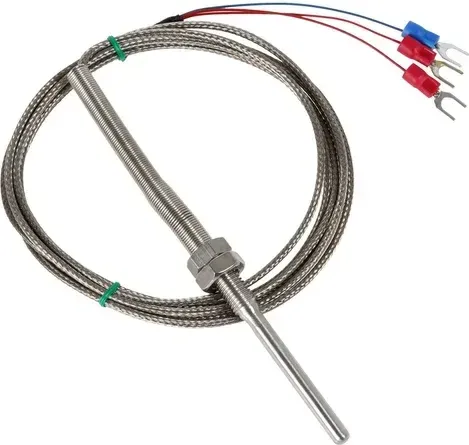
RTD Sensors (Pt100 / Pt1000)

Resistance thermometers offer the best accuracy and long-term stability across the range most processes run in. Heavy-duty assemblies cope with vibration and outdoor installation.

Best for
Accurate measurement to moderate temperatures

Pt100 / Pt1000High stability
Thermocouples
02 Sensor

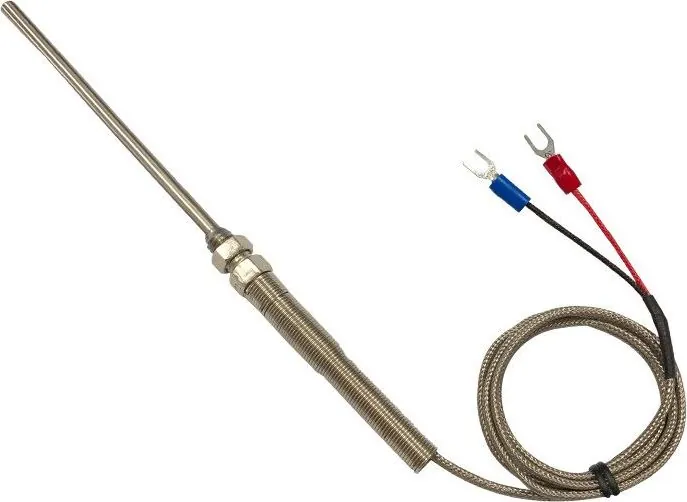
Thermocouples

Rugged, fast and able to reach temperatures far beyond an RTD. The choice for furnaces, kilns, exhausts and burner management.

Best for
High temperatures, fast response

Wide rangeRugged
HART Temperature Transmitter
03 Transmitter

HART Temperature Transmitter

Universal input for RTD, thermocouple, mV and ohm sensors, in single or dual-sensor configuration. Sensor and process diagnostics, IEC 61508 safety certification, dual-compartment housing and a large LCD.

Best for
Process loops and safety functions

HART 5 / 74–20 mA< 0.05 % of range
Non-Intrusive Surface Temperature Sensor
04 Assembly

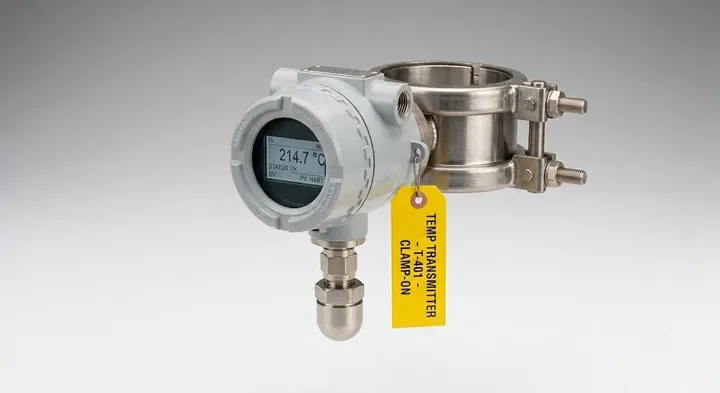
Non-Intrusive Surface Temperature Sensor

Measures process temperature from the pipe surface, without a thermowell or process penetration. No shutdown to install and no leak point.

Best for
Retrofits and hazardous media

No thermowellNo shutdown
Thermowells & Assemblies
05 Mechanical

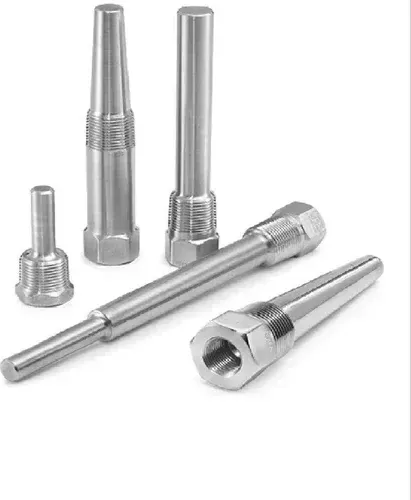
Thermowells & Assemblies

Flanged, threaded and welded thermowells sized for the line and checked for flow-induced vibration, so the sensor can be changed without draining the process.

Best for
Pressurised and flowing lines

Flanged / threaded
Temperature Switches & Gauges
06 Local / switching

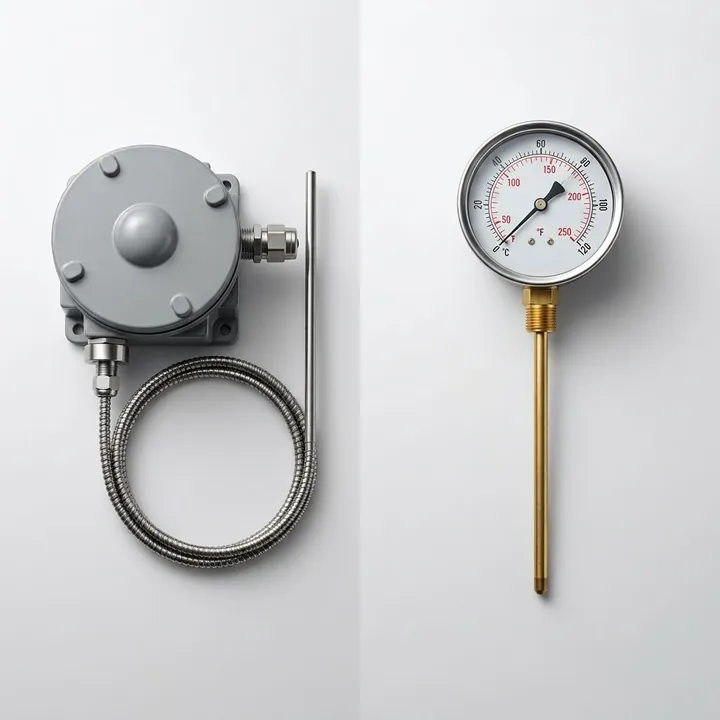
Temperature Switches & Gauges

Digital temperature switches and bimetal or gas-filled gauges for local indication and simple high-temperature protection.

Best for
Local indication and alarms

Local display
Selection

How we choose the right instrument.

01

Range

RTDs for accuracy in the common process range; thermocouples when the temperature climbs beyond it.

02

Response & immersion

Sensor diameter, thermowell design and insertion length set how quickly and truly the reading follows the process.

03

Accuracy over time

Transmitter-sensor matching and long-term stability better than ±0.1 % of span per year reduce recalibration.

04

Safety & area

SIL requirements, intrinsically safe or flameproof protection, and redundancy with dual sensors.

FAQ

Questions we hear most.

Not answered here? Ask an engineer directly.

Ask on WhatsApp

What is the difference between an RTD and a thermocouple?

An RTD, such as a Pt100, measures temperature through a change in electrical resistance and offers better accuracy and long-term stability in the range most processes operate in. A thermocouple generates a small voltage, covers much higher temperatures, responds faster and is more rugged, but is less accurate.

Why use a temperature transmitter instead of wiring the sensor directly?

A transmitter converts the low-level sensor signal into a robust 4–20 mA or HART signal that can travel long cable distances without interference. Smart transmitters also add sensor diagnostics and improve accuracy through transmitter-sensor matching.

Do I always need a thermowell?

A thermowell protects the sensor from pressure, flow and corrosion and lets you replace the sensor without draining the process. Where a process penetration is undesirable, a non-intrusive surface measurement can be used instead, with no thermowell and no shutdown.

What is a HART temperature transmitter?

It is a transmitter that carries a digital HART signal on top of the 4–20 mA loop. This allows remote configuration, calibration and diagnostics using the same two wires, and supports RTD, thermocouple, millivolt and ohm inputs.