

pH & ORP Sensors
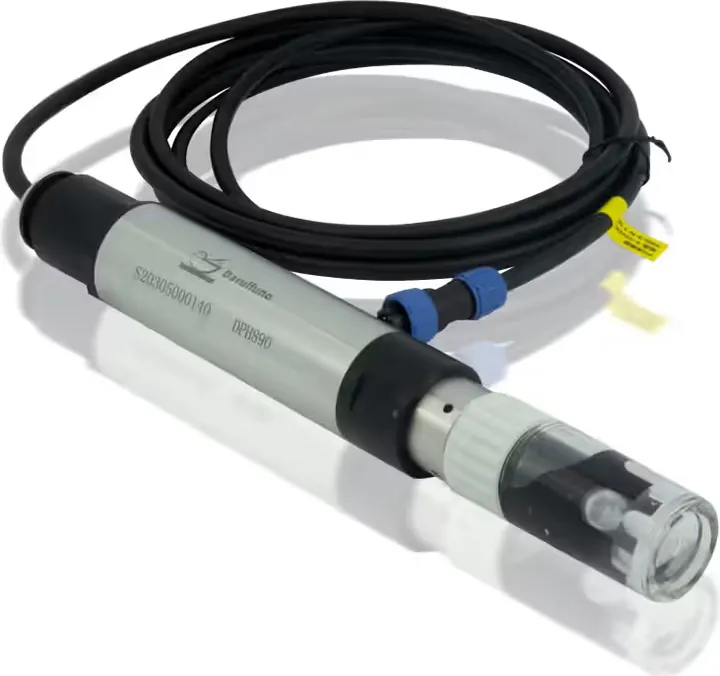
Continuous acidity and oxidation-reduction potential for neutralisation, coagulation, disinfection control and effluent compliance.
Best for
Dosing control, effluent discharge
Online liquid analysis for water treatment, RO plants, effluent monitoring and CIP chemical dosing, replacing grab samples with a live measurement you can control against.
A laboratory sample tells you what the water was like an hour ago. An online analyser tells you what it is like now, and lets the dosing pump, blower or valve respond straight away.
We supply sensors, transmitters, flow cells and sample conditioning as complete analytical measuring points, with the calibration and maintenance routine that keeps them accurate.
Typical applications
Where it is used
6 options. We recommend the one that suits your application, not the one that happens to be in stock.
Continuous acidity and oxidation-reduction potential for neutralisation, coagulation, disinfection control and effluent compliance.
Best for
Dosing control, effluent discharge
Contacting cells for pure and ultrapure water; inductive (toroidal) sensors for dirty, corrosive or concentrated solutions and CIP phase separation.
Best for
RO permeate, CIP, cooling water
Optical measurement of clarity for filter performance, raw and final water, and sludge concentration.
Best for
Filtration, clarifiers, final water
Optical (luminescent) sensors with no membrane or electrolyte to maintain. Aeration is the largest energy user in most treatment plants, and DO control cuts it.
Best for
Aeration basins, boiler feedwater
Residual disinfectant monitoring for potable water, cooling towers and swimming pools, with pH compensation.
Best for
Disinfection control
One transmitter for several sensors, with relays, analogue outputs and fieldbus for direct integration into PLC and SCADA.
Best for
Complete analytical panels
Measure what you will act on: the variable a dosing pump, blower or valve will actually control.
In-pipe, immersed in a tank or in a flow cell? Pressure, temperature, solids and fouling tendency matter.
Automatic cleaning, digital pre-calibrated sensors and accessible mounting decide whether the reading stays trustworthy.
Discharge permits and drinking water standards define the accuracy, logging and reporting you need.
pH, ORP (redox), conductivity, turbidity, suspended solids, dissolved oxygen, and free and total chlorine can all be measured continuously with online analysers.
pH measures how acidic or alkaline the water is. ORP (oxidation-reduction potential) measures its ability to oxidise or reduce, and is used to monitor disinfection and chemical reactions such as chlorination and dechlorination.
Aeration blowers are usually the largest energy user in a treatment plant. A dissolved oxygen sensor lets the control system run the blowers only as hard as the biology needs, rather than at a fixed, conservative output.
Use an inductive (toroidal) sensor for dirty, corrosive or highly concentrated solutions and for CIP phase separation, because it has no electrodes in contact with the liquid. Contacting sensors are better for pure and ultrapure water.